
In a world that moves faster than ever, art has become one of the last places where time still means something. Hours, days, months—sometimes years—are poured into a single frame. No studio has embodied this devotion more than Studio Ghibli.
Summary
For over three decades, Hayao Miyazaki and his team built a legacy on hand-drawn dreams. Every blade of grass in My Neighbor Totoro, every sky in Spirited Away, every haunted forest in Princess Mononoke—they weren’t just illustrations. They were lived-in memories. They were made slowly, deliberately, painfully, beautifully.
And now, with the rise of AI-generated art, that kind of emotional investment is under quiet siege.
AI Can Copy the Look. But Never the Soul.
An AI model can now generate a “Ghibli-style” landscape in under a minute. It can replicate the brush strokes. It can mimic the soft palettes. It can even follow prompts like “a Ghibli-style floating city at sunset.”
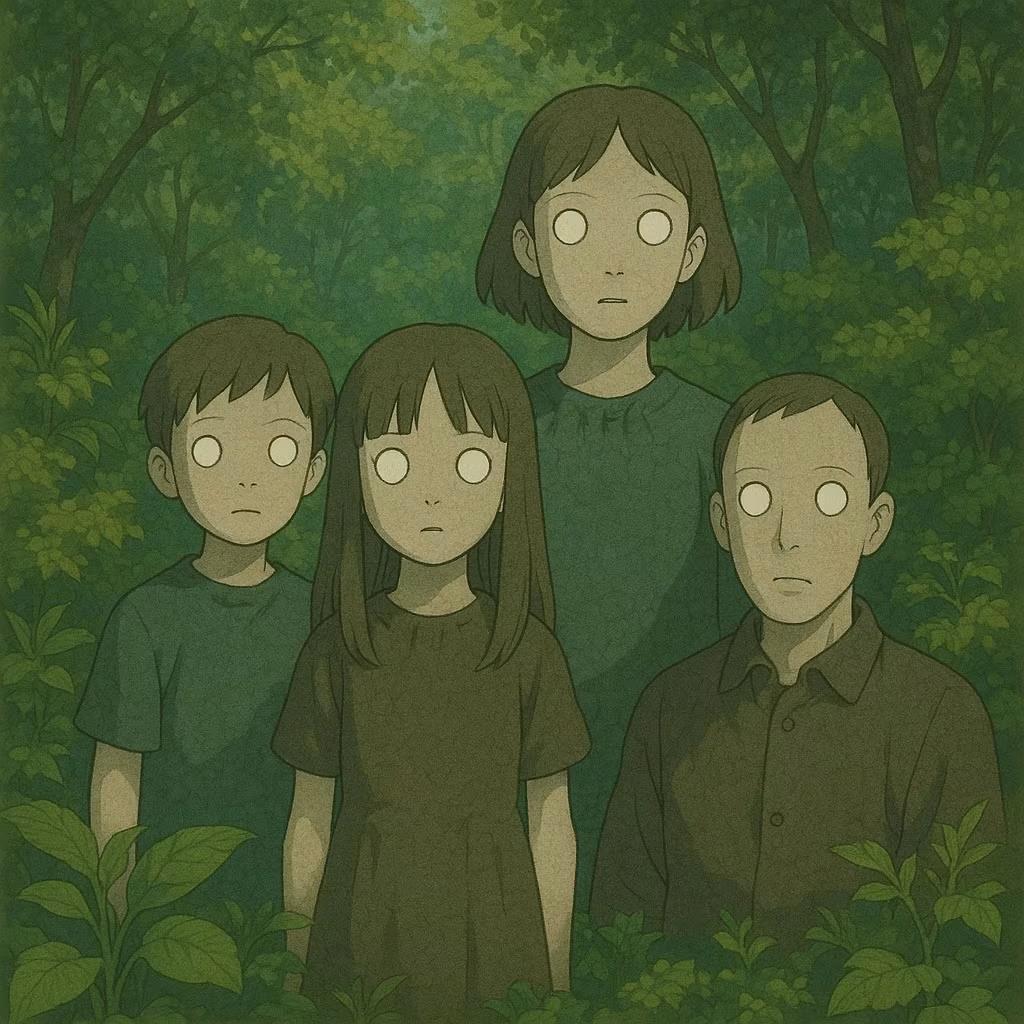
But here’s the haunting truth: it understands none of it.
The warmth of a Ghibli scene doesn’t come from its color scheme—it comes from its intention. Miyazaki once said,
“We depict hatred, but it is to depict that there are more important things. We depict a curse, to depict the joy of liberation”
AI knows how to create a curse. But it has no joy to liberate.
30 Years vs. 30 Seconds: A Cruel Comparison
It took Miyazaki over 30 years to bring his style to life. He famously redrew scenes hundreds of times to get the emotion right. Not the look. The feeling.
Now imagine a machine doing the same thing in seconds—with no experience, no struggle, no growth, no pain. It’s like watching someone photocopy a love letter and calling it their own.
Yes, AI is progress. But when that progress comes at the cost of erasing the process, it becomes a mockery of everything artists like Miyazaki stand for.
The Unseen Damage to Artists
The harm isn’t just philosophical—it’s painfully real.
- Visibility Loss: Platforms are flooded with AI-generated “Ghibli art,” making it harder for real illustrators to be seen.
- Emotional Fatigue: Artists report burnout, feeling like their painstaking work is being drowned out by algorithms.
- Imitation without Respect: Some AI tools are even trained on copyrighted art without permission—effectively stealing the lifeblood of traditional artists to build their own soulless replicas.
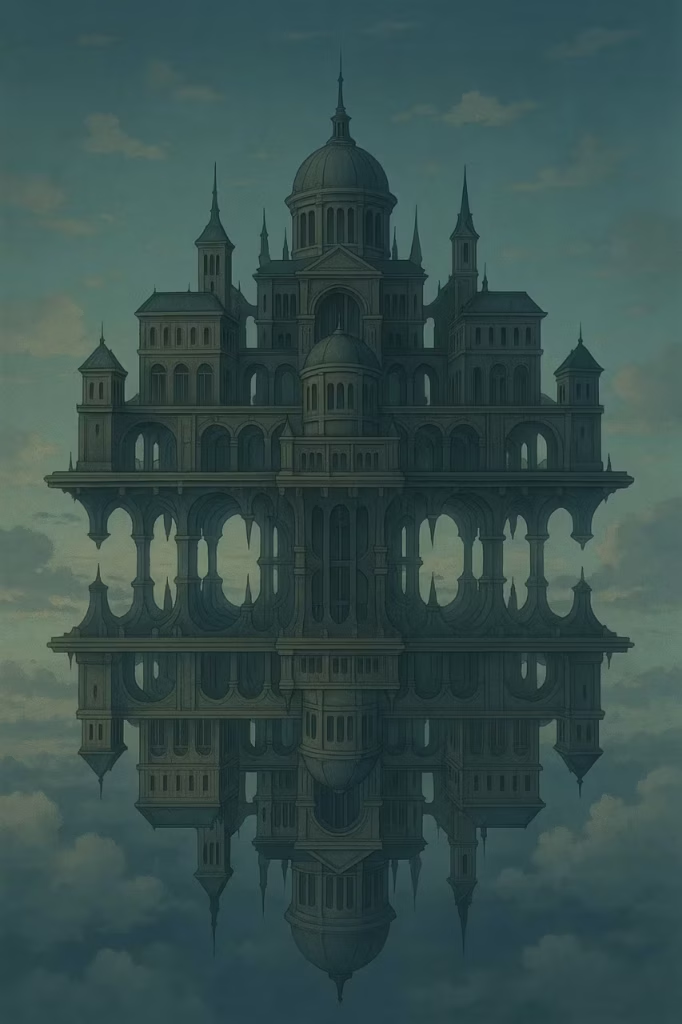
Ghibli’s art was born from human fragility. It’s full of imperfections that make it whole. AI art, by contrast, often feels… hollow. Technically flawless, emotionally vacant.
What Would Miyazaki Say?
In interviews, Hayao Miyazaki has been blunt about his views on artificial creativity. When shown a demo of AI-generated animation, he called it “an insult to life itself.” He didn’t say this out of stubbornness, but out of deep respect—for life, for movement, for struggle, and for story.
This is not a war between man and machine. It’s a quiet erosion. A fading of human fingerprints from the art we once used to tell our stories.
If You Truly Love Ghibli, Protect What Made It Special
Loving Ghibli is not just loving its style. It’s loving its spirit. It’s standing up for the people who still take the time to draw with meaning.
AI can make pretty pictures. But Studio Ghibli made worlds. Worlds that breathed, suffered, and healed. Worlds that taught us about life, death, love, nature, and silence.
If we let AI wash over this legacy without asking questions, we risk losing not just a style—but a way of seeing the world.
Final Reflection
Ghibli art wasn’t made to be efficient. It was made to be felt. And that feeling came from human hands—tired, trembling, stubborn hands that kept drawing even when the world moved on.
Let us not move on so fast. Let us not forget the soul in the lines.
Because once the soul is gone, all that’s left… is noise.